12 min read · Updated 13 May 2026
After size, material is the most decisive choice you make when buying a rug. It governs how the rug feels underfoot, how it stands up to traffic, how easy it is to look after and how long it lasts.
It is also the criterion people understand least well: wool and synthetics get confused, viscose is imagined as a poor relation of silk, and Tencel is forgotten altogether. This guide runs through the six materials in the Casemira catalogue and how to choose according to how you will actually use the rug.
1. Why material is criterion #1 for a rug that lasts
Before comparing fibres, let us look at what material actually does over the life of a rug.
1.1 The four roles of material
Material determines four things at once. First, the feel: soft, silky, matt, structured, natural or synthetic. Second, the resistance to flattening, distortion, stains and repeated foot traffic. Third, the upkeep: machine washing or specialised cleaning, sensitivity to water, how often it needs washing. Fourth, the longevity: a quality wool rug can last several decades, while an entry-level polypropylene wears out in a few years. To dig into these criteria, see our complete guide to rug quality.
1.2 Three questions to ask yourself before choosing
Before comparing materials, ask yourself three simple questions. Are there young children or pets in the house? If so, washable becomes all but essential. How much traffic does the room get? A main living room and an entrance hall call for tougher materials than a bedroom does. What is my time horizon? For five years in a rented flat, polypropylene does the job. For twenty years in a family home, premium wool earns its place.
2. Wool: the historic noble fibre
Wool has been the rug fibre for thousands of years. Elastic, hard-wearing, insulating both thermally and acoustically, it flattens very little and holds its volume over time. It is the reference material for a quiet premium living room and the main bedroom.
In terms of feel, wool is dense and warm, naturally full underfoot. It absorbs a little moisture from the air, which makes it comfortable in summer as well as winter. In terms of upkeep, it never goes in the machine: even a delicate cycle can felt the fibre and shrink the rug by several centimetres. Cleaning is done dry, or by a professional at home for the most precious pieces.
In terms of budget, wool is one of the most expensive materials on the market, especially in pure form or in a fine blend. It is found mainly in handmade rugs, in versions ranging from pure wool to wool plus viscose or wool plus Tencel. To explore this range, see the handmade rug collection, which brings together more than 700 models.
3. Viscose: silky and lustrous
Viscose is a cellulosic fibre regenerated from wood pulp. It gives a very silky, lustrous feel, close to silk at a far lower cost. It is the favourite material for decorative rugs where the visual effect matters more than intensive use.
In terms of feel, viscose catches the light, with magnificent depth effects across the motifs. In terms of resistance, the fibre is damaged by water: a single home wash can be enough to ruin a viscose rug for good. It is also sensitive to heavy rubbing and holds marks under heavy furniture. In terms of upkeep, viscose calls for specialised or dry cleaning; it tolerates neither the machine nor a conventional rug shampoo.
Who is viscose for? For decorative living rooms without young children or pets, for adult bedrooms, for rooms where the rug is admired more than it is used. It is often paired with wool in 70/30 or 80/20 blends to gain durability while keeping the viscose sheen. On budget, it is a mid-range to premium material depending on quality.
4. Tencel (lyocell): the contemporary eco fibre
Tencel (the trade name for lyocell) is an eco fibre made from the cellulose of wood grown in certified forests, processed in a closed-loop chemical system that recycles 99 % of the solvents. It is the fibre that has moved upmarket over the past five years for eco-conscious premium rugs.
In terms of feel, Tencel is silky and matt, softer than wool and more stable than viscose. It combines the elegance of viscose with better performance over time. In terms of resistance, Tencel is more stable in water than viscose, but it remains fragile in a domestic machine wash. Cleaning is done dry or by a professional.
At Casemira, Tencel is found mainly in premium handmade rugs, often in a wool and Tencel blend that combines the strength of wool with the softness of Tencel. It is the distinctive 2026 option for a premium living room that wants high-end looks alongside a reduced environmental footprint. To discover the Tencel models, see the handmade rug collection.
5. Cotton: the natural everyday fibre
Cotton is a natural fibre that is affordable and simple to look after. At Casemira it appears mainly in a blend with other fibres (cotton and polyester on certain washable rugs, cotton within the bathroom sets, cotton in the backing of handmade rugs). There is no 100 % cotton collection at Casemira.
In terms of feel, cotton is soft and flat, with no deep relief. In terms of resistance, it copes well with regular traffic but flattens faster than wool. In terms of upkeep, it plays to its great strength: most rugs containing cotton take a 30 °C machine wash on a short cycle, which makes them an excellent choice for rooms that need washing regularly.
Who is cotton for? For bathroom sets (where it feels soft and warm), and for washable blend rugs in a child's bedroom, a kitchen or a light living room whose decor changes often. On budget, it is one of the most affordable materials in the catalogue. For the washable models containing cotton, see the washable rug collection.
6. Polypropylene: modern and practical (entry level and premium)
Polypropylene is the king of the modern family rug. Stable in water, stain-resistant, inexpensive to produce and comfortable in its modern versions, it combines durability with simple care. It is the material that covers the widest span of the Casemira catalogue.
In terms of feel, polypropylene comes in two main versions. Entry-level polypropylene is matt, structured and flat. Premium polypropylene (often called heat-set or frisé) mimics the feel of wool with surprising volume and softness. The gap in quality is one of the widest on the rug market.
In terms of resistance, polypropylene is naturally hydrophobic: it does not swell in water, does not stain easily, and holds its colours for a long time. In terms of upkeep, the washable models take a 30°C machine wash on a delicate cycle without harm. That is what makes it the favourite material of families with young children and households with pets. For the detailed washing method, see our guide to machine-washable rugs.
In terms of uses, polypropylene covers the family living room, the child's bedroom, the hallway, the kitchen, and even outdoors in its UV-treated version. It is also the material that offers the best price-to-performance ratio in large and very large sizes.
7. Polyester: soft and hard-wearing
Polyester is the softest synthetic fibre in the catalogue. Plusher than polypropylene and easier to dye in bright colours and high-definition printed motifs, it has made its name in rugs with contemporary designs and dopamine decor moods.
In terms of feel, polyester is soft, sometimes close to a short shaggy, and very pleasant under bare feet. In terms of resistance, it flattens a little faster than polypropylene but stands up well to traffic. In terms of upkeep, the models concerned take a 30 °C machine wash on a delicate cycle. Polyester dries quickly when laid flat, which makes it a good choice for shared bathrooms and damp rooms.
Who is polyester for? For busy households that want comfort alongside easy care, for teenage bedrooms after a graphic edge, for living spaces where the rug is used every day without ceremony. On budget, it sits in the middle of the range.
"A well-chosen material counts for more than a fashionable colour."
8. Decision table: material × room × budget
To sum up the choice for your own situation, here is the reference table to keep in mind.
| Material | Ideal room | Average budget | Machine washable | Indicative lifespan |
|---|---|---|---|---|
| Wool | Premium living room, adult bedroom | High | No | Several decades |
| Viscose | Decorative living room without children | Mid to high | No | One to two decades if well looked after |
| Tencel | Eco-conscious premium living room | High | No | One to two decades |
| Cotton | Child's bedroom, kitchen, bathroom | Affordable | Yes on flat weaves | Five to ten years |
| Entry-level polypropylene | Secondary room, rented flat | Very affordable | Depends on the model | Three to five years |
| Premium polypropylene | Family living room, bedroom, hallway | Affordable to mid-range | Yes for the washable models | Five to ten years |
| Polyester | Contemporary living room, teenager's bedroom | Affordable to mid-range | Yes on the models concerned | Five to eight years |
One important note: the lifespans given are indicative, based on textile industry standards, and depend heavily on care, exposure and the specific quality of the model. A well-cared-for rug can comfortably outlast these ranges.
9. Testing the material before you buy: samples and 30-day returns
Judging a material on screen has its limits, even with excellent product photography. Casemira offers two complementary ways to make your choice a safe one.
For some Handmade models, the Easy Clean range and a few outdoor rugs (more than 120 eligible references in the catalogue in total), Casemira offers a sample service: a 20 x 30 cm cutting of the exact material is delivered to your door. That lets you judge the feel, the density and how well the pile springs back after pressure before ordering the full rug. You can order up to 3 samples (€10 for one, €15 for two, €20 for three) with free delivery, and the amount is fully deducted from your rug with the code you receive by email. See the eligible models in the sample collection.
For the other models in the catalogue, free returns within 30 days let you try the material at home with no risk. If the fibre is not what you expected (feel, thickness, visual effect), you send the rug back free of charge within 30 days. Customer service is available by email at contact@casemira.com and replies within 24 working hours.
Three Casemira rugs for the living room
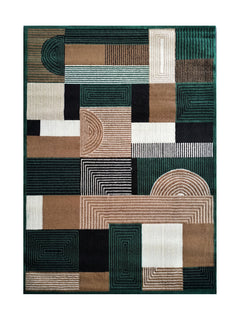
 Brown & Cream Geometric Rug - Valore
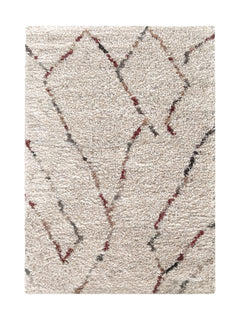
 Beige & Grey Geometric Rug - Mirador
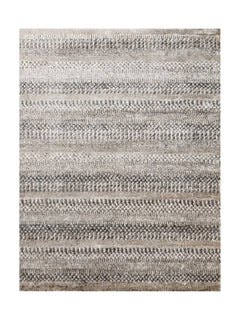
 Grey Abstract Washable Rug - Cimento
Your questions about rug materials
Which rug material is the most durable?
According to textile industry standards, quality wool is the most durable fibre among classic rugs: several decades in normal use with regular care.
Premium UV-treated polypropylene is the most durable for outdoor use. For intensive indoor family use with regular washing, a washable rug from the Easy Clean range (in polyester) offers the best balance of durability and practicality.
What is the difference between virgin wool and blended wool?
Virgin wool is wool from a sheep's first shearing, never used before: it is the longest, finest and most elastic fibre.
Blended wool combines wool with other fibres. A blend of "80 % wool plus 20 % viscose" keeps most of the qualities of pure wool. Conversely, a blend with only 20 % wool has little but the marketing name in common with it.
Is viscose genuinely luxurious, or just marketing?
Both. Top-quality viscose gives a sheen close to silk at a far lower cost, which makes it genuinely good value on decorative rugs.
Low-quality viscose flattens quickly, loses its sheen and holds marks. Check the density, the evenness of the tufting and the edge finishing, and prefer viscose in a fine blend (wool and viscose) rather than pure.
Is Tencel really better than cotton?
On some criteria, yes. Tencel feels silkier than cotton, holds up better over time, and is produced with less water and fewer solvents.
Cotton, on the other hand, is simpler to look after: it takes a 30 °C machine wash on a short cycle, which Tencel does not tolerate. Tencel for an eco-conscious premium living room, cotton for a room that needs washing regularly.
Is polypropylene toxic in the home?
No, the modern polypropylene used in rugs is considered safe for ordinary domestic use. Its standard versions contain neither PVC nor phthalates.
For added assurance that no harmful substances are present, look for the Oeko-Tex Standard 100 mention on the product page: this voluntary certification tests every component for the absence of formaldehyde, heavy metals, pesticides and azo dyes.
Is a sample really useful for judging a material?
Yes, particularly for confirming the feel and the density of a premium material (wool, viscose, Tencel).
On the eligible models (more than 120 references: some of the handmade rugs, the Easy Clean range and a few outdoor rugs), the sample costs from €10, fully deducted from your rug with the code you receive by email. For the other models, free returns within 30 days take its place with no financial risk.
Written by the Casemira team. Our team, based in Brittany, selects more than 1,500 rugs to help you find the one that suits you. Find out more about Casemira.