10 min read · Updated 5 May 2026
In the space of a few years the washable rug has gone from being a "practical" option to an obvious choice in most homes. Young children, pets, rooms that open onto the kitchen, working from home and the meals eaten in front of the sofa that come with it: a rug now has to live with a busy daily routine.
What matters is knowing the technical characteristics that make a rug genuinely machine washable, and knowing how to wash it so that it lasts. This guide runs through the eight points that make the difference when you are choosing a machine washable rug.
1. What is a machine washable rug?
A machine washable rug is one whose fibre, dye, backing and finishing are designed to withstand a wash cycle in a standard domestic machine. That definition rules out two things it is often confused with: rugs that are merely "water-resistant" and tolerate a damp sponge, and rugs that are "cleanable" but only by professional dry cleaning.
1.1 Four badges on the product page, one Easy Clean tag that brings them together
Every rug in the Casemira washable collection goes into the machine at 30 °C. On Easy Clean models (the premium subset), the product page also displays three further technical badges: Water-Repellent and Stain-Resistant (hydrophobic coating), Non-Slip (secure latex backing) and Scratch-Resistant (laboratory tested). The Easy Clean tag therefore stands for the complete combination (washable, water-repellent, non-slip and resistant) designed for intensive family use without losing brightness or shape.
On the site, this badge shows on the product preview before you even open the page. It works as a quick filter when you are looking for a rug for a family, a kitchen or a hallway. For the "living room with children or pets" angle, you can also read our guide to choosing a living-room rug.
1.2 Why demand for washable rugs is soaring in 2026
Several underlying trends are converging. Households own more and more pets. Working from home brings meals closer to the sofa. Rooms that open onto the kitchen blur the line between the living area and the cooking area. And people refresh their decor more often than they used to, which pushes them towards materials that are simpler to look after. The washable rug answers all four shifts at once, without giving up on looks.
2. Which materials really go in the machine?
Not every material withstands machine washing. Before buying, check the care label and the product page. The table below sums up compatibility by broad material family, as applied across the Casemira catalogue.
2.1 Materials × machine: the summary table
| Material | Machine washable | Recommended programme | Ideal for |
|---|---|---|---|
| Polypropylene | Yes on the models concerned | 30 °C, delicate, no fast spin | Families, pets, heavy traffic |
| Polyester | Yes on the models concerned | 30 °C, delicate | Busy households, living spaces |
| Flat-woven cotton | Yes on flat weaves | 30 °C, short cycle | Kitchen, child's bedroom, decor that changes |
| Wool | No, specialised cleaning | Dry clean or a professional at home | A quiet premium living room |
| Viscose | No, water damages it | Occasional gentle cleaning | A decorative living room without children |
| Tencel | No, gentle cleaning | Specialised cleaning | An eco-conscious premium living room |
2.2 Polypropylene, polyester, cotton: the three Casemira washable materials
Polypropylene is the king of washable materials. Stable in water, stain-resistant, inexpensive to produce and comfortable in its modern versions, it combines durability with simple care. The fibres do not swell in the machine, the backing stays flat and the colours do not run.
Polyester offers a softer feel, sometimes close to a short shaggy. It washes well at 30 °C and dries quickly when laid flat. At Casemira, polyester features particularly in models with high-definition printed motifs.
Cotton is the most natural of the washable materials. You find it mainly in flat kilim-style weaves, in kitchen rugs and in some decorative pieces in a Nordic Berber style. It takes a 30 °C machine wash on a short cycle, but avoid a fast spin, which can press in creases that never fully come out.
2.3 Wool, viscose, Tencel: why never in the machine
Wool is a living fibre that felts on contact with hot water and mechanical action. A machine cycle, even a delicate one, can shrink a wool rug by several centimetres and cost it its structure. Viscose comes from cellulose that collapses in water, especially under tension: a single home wash can be enough to ruin a viscose rug for good. Tencel shares the same constraints as viscose, more stable but with no tolerance for the machine. For these three materials the rule is clear: occasional dry cleaning, or a professional for the most precious pieces. The top-of-the-range models in these materials are gathered in the handmade rugs collection.
3. The Casemira Easy Clean tag: washable plus water-repellent plus non-slip plus resistant
At Casemira, Easy Clean is the tag that identifies premium washable rugs combining the four technical qualities that repeated washing calls for: Machine Washable, Water-Repellent and Stain-Resistant (hydrophobic coating), Non-Slip (secure latex backing) and Scratch-Resistant (laboratory tested). Each of these qualities appears as a separate badge on the product page. The Easy Clean tag therefore tells the buyer that the model brings all four characteristics together.
Technically, these rugs combine a thin machine-friendly non-slip backing, fibres treated to slow down how liquids penetrate, and stable dyes. That is what separates a rug you can wash "once or twice" from a rug designed for an active family life over the long term.
The raw Water-Repellent filter, for its part, gathers both indoor Easy Clean models and outdoor rugs (which are naturally water-repellent too). To target indoor washable rugs specifically, the Easy Clean tag remains the simplest marker. To explore the Easy Clean models within the washable range, see the washable rug collection.
4. How to machine wash a rug in 5 steps
A good washing routine adds several years to a washable rug. Follow the exact recommendations on your model's product page, but here is the generic method that works on the vast majority of Casemira Easy Clean rugs.
4.1 Step 1: prepare the rug before it goes in
Vacuum both sides of the rug with the soft brush. This removes the dust, hair and crumbs that would otherwise turn the wash cycle into a muddy bath. If a visible stain remains, treat it before washing with a little cold water and a clean sponge, blotting rather than rubbing.
4.2 Step 2: choose the right programme
Select the delicate or cold wool programme at 30 °C. Switch off the fast spin: go for a gentle spin at 400-600 rpm maximum. Most domestic machines of 7 to 10 kg take an 80x150 or 120x170 rug without any trouble. For larger sizes, plan on a launderette, or roll the rug up tightly to save room in the drum.
4.3 Step 3: measure out the detergent properly
Use a mild liquid detergent, free of optical brighteners. Avoid bleach, fabric softener and chlorine-based stain removers, which can attack the fibres or take the colour out. Half a dose of detergent is plenty for a rug: too much leaves residual foam that stiffens the fibres as they dry.
4.4 Step 4: dry flat, never in the tumble dryer
Take the rug out while it is still damp and lay it flat on an airer or another well-ventilated surface. Avoid hanging it over a line: the weight of the water stretches the rug and distorts the backing. Do not use the tumble dryer under any circumstances, as its heat can melt synthetic fibres and lift the non-slip backing. Allow 12 to 24 hours of drying, depending on the size and the humidity in the room.
4.5 Step 5: put it back and check it over
Once it is dry, shake the rug gently to bring the fibres back to life. Check the backing: it should be supple and flat, with no bubbling and no lingering smell. Put the rug back, adding an anti-slip underlay beneath it if needed, especially on a smooth floor.
5. Washable rugs by lifestyle
The right washable rug is not the same for everyone: it depends on your actual routine. Three typical profiles cover most situations.
5.1 Families with young children
With young children, go for a washable rug marked Easy Clean (Machine Washable plus Water-Repellent and Stain-Resistant plus Non-Slip plus Scratch-Resistant) in polypropylene or polyester, with a washable non-slip backing. A 160x230 or 120x170 size under the coffee table makes washing easy at the first mishap. Favour neutral colours or printed motifs, which disguise small marks until the next wash. The four technical badges are visible directly on the pages of the Casemira washable rugs.
5.2 Households with pets
Pets bring three constraints: hair, claw marks and sometimes small accidents. For hair, a short polypropylene is the easiest to look after: a pass with the vacuum removes most of it and the occasional wash finishes the job. For claw marks, avoid very hairy rugs, which tear quickly, and choose a flat, dense weave instead. For accidents, the Easy Clean tag comes into its own: the water-repellent fibre gives you time to act before the liquid soaks in.
5.3 Damp rooms and heavy soiling (kitchen, hallway)
The kitchen and the hallway are the two areas that need washing most often. A washable rug becomes essential there. For the kitchen, see the dedicated kitchen rugs collection, which brings together the sizes and motifs designed for the dining area. For the hallway, a long runner format soaks up the damp from shoes and goes into the machine regularly. See the hallway rugs collection.
"A washable rug means the freedom to live normally at home."
6. Underfloor heating and washable rugs
Most Casemira washable rugs work with underfloor heating, as long as you choose a thin material that lets heat through. Flat polypropylenes and flat-woven cottons are the best suited: their low thickness puts up no excessive resistance to the heat coming through. Avoid very thick or shaggy models, which act like an insulating blanket and reduce the efficiency of the heated floor.
Check the product page specifications for the words "compatible with underfloor heating" where they are stated. If you are in any doubt, Casemira customer service is available Monday to Saturday, 8am to 8pm, on 02 59 66 01 35 or by email at contact@casemira.com to confirm compatibility before you buy.
7. How much to spend on a good washable rug
The Casemira catalogue covers a wide range for washable rugs. Three concrete tiers to help you place yourself:
Under €100 (accessible entry level): washable polypropylene or cotton rugs in small sizes up to 80x150. Ideal for the kitchen, the hallway or a child's bedroom. Good value for a first experience of washable rugs.
€100 to €300 (the Easy Clean core range): this is the most heavily represented bracket for a living room or a standard bedroom. Sizes from 120x170 to 200x300, the Easy Clean tag on many models, considered designs and plenty of colour options. An excellent balance of durability and looks for a main living room.
Over €300 (premium washable in large sizes): Easy Clean rugs in 200x300 and above, sophisticated motifs, a reinforced non-slip backing. The investment stacks up for a large living room or an open-plan space that the whole household walks through.
Across the whole catalogue, delivery is free on orders over €100 in mainland France (€9.99 below that). Payment in 3 interest-free instalments with Klarna is available to spread larger baskets. Returns are free within 30 days: if the washable rug you chose is not right for your home, sending it back costs nothing.
Three Casemira rugs for the living room
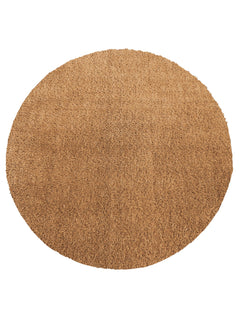
 Brown Shaggy Washable Rug - Sahel
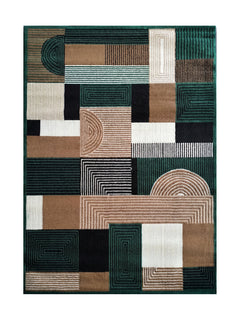
 Pink and Burgundy Oriental Washable Rug - Terrazzo
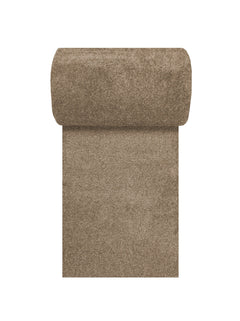
 Beige Vintage Washable Rug - Massif
Your questions about washable rugs
What is the difference between Easy Clean and a rug that is simply washable?
The Easy Clean tag marks the models that bring together four technical characteristics, shown as separate badges on the product page: Machine Washable, Water-Repellent and Stain-Resistant, Non-Slip and Scratch-Resistant.
Every rug in the washable collection goes into the machine: the Easy Clean tag additionally flags the models that combine the three other qualities (water repellency, grip, scratch resistance), designed to stand up to repeated washing over time.
Is a 7 kg domestic machine enough to wash a rug?
Yes for sizes up to around 120x170, rolling the rug up tightly in the drum. Beyond that (160x230 and above), an 8-10 kg machine is more comfortable.
For very large sizes (200x300 and up), a launderette or professional cleaning at home is preferable.
Will the rug lose its colour in the wash?
Casemira washable rugs are designed to go into the machine at 30 °C on a delicate cycle with no visible deterioration: the dyes are stable and made to take repeated washing.
To limit any risk, wash the rug on its own, in cold water, with a mild detergent and no bleach or fabric softener. Avoid chlorine-based stain removers, which can lighten the fibres.
Do you need an anti-slip underlay with a washable rug?
It depends on the floor. On a very smooth wood or tiled floor, a thin washable underlay adds security, especially in a room people walk through.
Many Casemira washable rugs already include a non-slip backing that copes with washing: check the product page before adding an extra underlay.
How many wash cycles can an Easy Clean rug take?
Models with the Easy Clean tag are designed to take a wash every one to three months for several years with no visible deterioration.
Real-world lifespan depends on sticking to the 30 °C delicate programme and drying flat. Always follow the exact recommendations on your model's product page.
Why should a rug never go in the tumble dryer?
The heat of a tumble dryer can melt synthetic fibres (polypropylene, polyester) and lift the non-slip backing.
Drying flat on an airer is the only safe method, even if it takes 12 to 24 hours. This simple precaution stops an Easy Clean rug from turning into a distorted, unusable piece.
Written by the Casemira team. Our team, based in Brittany, selects more than 900 rugs to help you find the one that suits you. Find out more about Casemira.