1. The 20 cm rule under the sofa: why
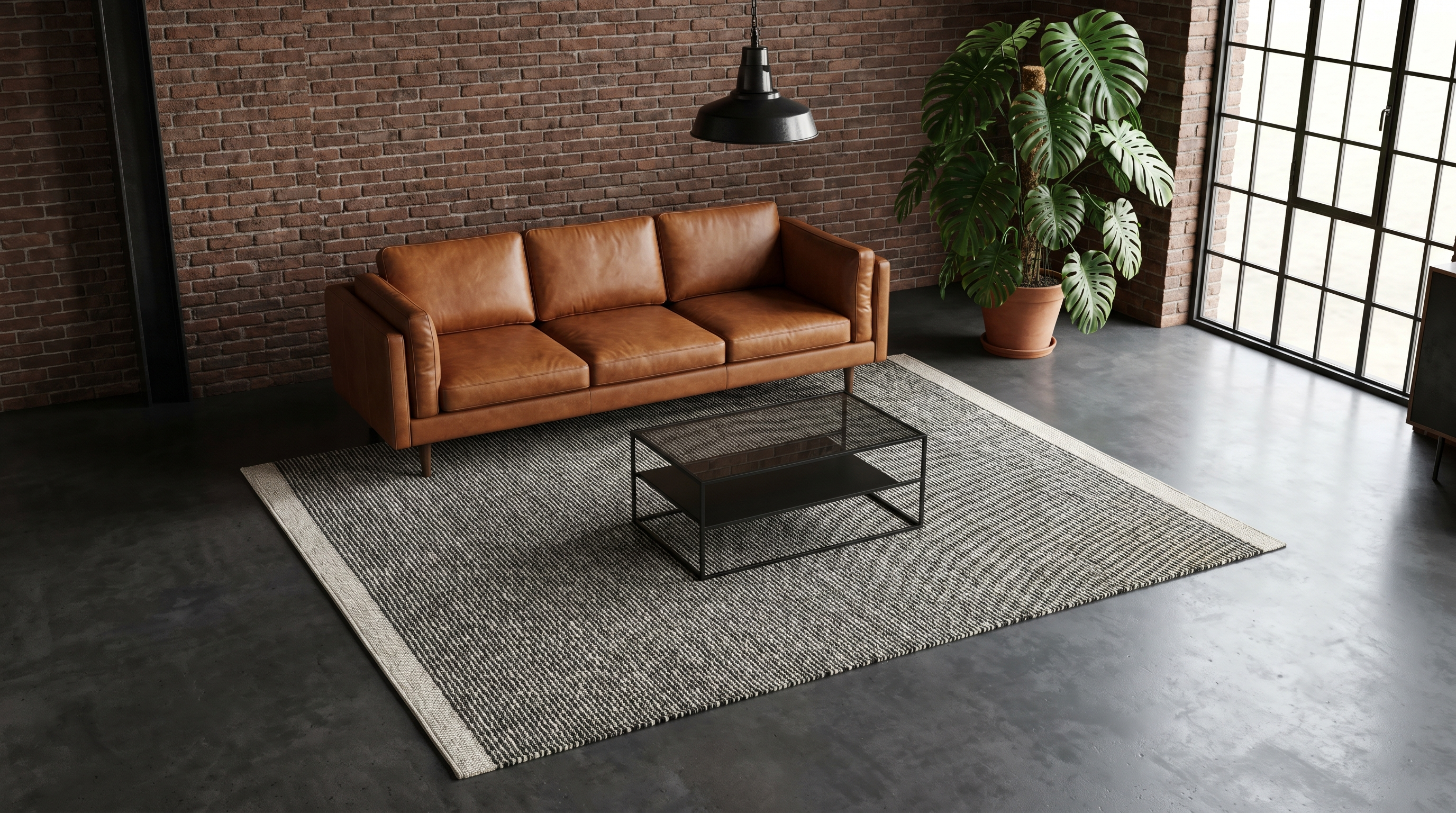
The rule is easy to state: the rug should extend at least 20 cm beyond each side of the sofa, ideally 30 to 40 cm in a large living room. It sounds trivial. It is in fact the difference between a room that holds together visually and a room where everything floats.
Why 20 cm? Three practical reasons.
First: to frame the seating zone. A rug that stops exactly under the sofa looks accidentally cropped, as though a slightly oversized sofa had been dropped onto a rug that was too small. Those 20 cm of overhang create a visual frame taking in the sofa, the armchairs and the coffee table together.
Second: to balance the proportions. A 220 cm wide sofa on a 160 cm rug creates an imbalance: the rug looks pinched, the sofa oversized. With 20 cm on each side the rug measures at least 260 cm, and the visual ratio comes right.
Third: to make moving around easier. As you sit down or get up, your feet often land beside the sofa. If the rug does not extend, they land on a cold floor and the gesture breaks the coherence of the zone. With 20 cm, your foot stays on the rug 80% of the time.
Why not 30 cm everywhere? 20 cm is the acceptable minimum. 30 to 40 cm is the ideal. Beyond 50 cm on each side, the rug becomes oversized relative to the sofa. The universal rule holds: 20 cm minimum, 30-40 cm ideal, more than 50 cm is too much.
2. Set-up 1: everything on the rug
This is the most generous arrangement. The entire sofa (all four legs) sits on the rug, which extends 20 to 40 cm behind and to the sides.
Advantages: maximum visual coherence, thermal insulation under the whole sofa, and the feeling of a room fully under control. Photogenic in the interiors magazines.
Drawbacks: it calls for a large size (200x300 as a minimum for a three-seater, 240x330 or 300x400 for a corner sofa). And a higher spend.
When to use it? Living rooms of 18 m² and up, three-seaters or corner sofas, and a rug budget that stretches to the larger sizes. This is the reference arrangement for magazine-worthy rooms and large open-plan spaces.
Minimum sizes:
- Two-seater (180 cm) → 200x290 or 200x300 rug
- Three-seater (220-240 cm) → 240x330 or 250x350 rug
- Corner sofa (280 cm) → 300x400 rug
3. Set-up 2: front legs only
This is the most common arrangement and the classic compromise in most living rooms. The two front legs of the sofa rest on the rug. The rest of the sofa is on the floor, but visually the sofa is still "connected" to the rug.
Advantages: a more modest rug size (160x230 or 200x290 will do), a reasonable spend, and it works in rooms of 13 to 20 m². It delivers 80% of the visual benefit of set-up 1 for 50% of the budget.
Drawbacks: less coherent than set-up 1 in very large rooms. The back of the sofa stays on the bare floor, which can look unfinished if the ceiling is high or the room very bright.
When to use it? Living rooms of 13 to 20 m², with two- or three-seater sofas. It is the arrangement interior designers teach most often, because the balance of cost against effect is the best available.
How to do it: position the rug so the two front legs of the sofa rest on it. The rug should extend 20 to 30 cm beyond each side of the sofa, and run entirely under the coffee table in front.
"A sofa that never touches its rug is a sofa that floats."
4. Set-up 3: rug in front of the sofa
The rug sits entirely in front of the sofa, with no legs on it. A contested arrangement, and rarely recommended.
When it does not work (most of the time): in a standard living room with a two- or three-seater facing a TV unit, this layout leaves the sofa visually adrift. The rug lives its own life and the sofa looks suspended in mid-air. It is the classic outcome of buying a rug that is too small and then having to place it badly.
When it can work (specific cases):
Case 1, a low sofa with a substantial TV wall. If an entire wall is taken up by a TV unit with shelving, the rug can align on the TV-to-sofa axis and stay between the two. The TV zone becomes the centre and the sofa the perimeter.
Case 2, a very large coffee table. A coffee table measuring more than 120x80 cm can structure the zone on its own. The rug slips under the table, overhanging slightly, without the sofa needing to have any legs on it.
Case 3, a small, constrained living room. In a 12 m² room where the sofa is pushed against a wall, you sometimes have no choice but to place the rug in front. In that case, use 120x170 or 160x230 at most.
In every other case, go for set-up 2 (front legs) or set-up 1 (everything on the rug), even if that means stepping up a size.
5. Sizes by type of sofa
The right size follows directly from the width of the sofa. Here is the reference table.
| Sofa | Width | Recommended rug | Ideal set-up |
|---|---|---|---|
| Compact two-seater | 160-180 cm | 160x230 | Front legs |
| Standard two-seater | 180-200 cm | 160x230 or 200x290 | Front legs or everything on |
| Three-seater | 220-240 cm | 200x300 | Front legs |
| XL three-seater | 240-260 cm | 240x330 | Everything on |
| Compact corner sofa | 240x180 | 240x330 | Everything on |
| XL corner sofa | 280x200 or more | 300x400 | Everything on |
To go further on sizes by room area, our complete guide to rug sizes for a 15, 20 or 25 m² living room sets out the arrangements floor area by floor area.
6. The rug and the coffee table: balance
The coffee table is the other centrepiece of a living room. Its relationship with the rug follows two simple rules.
Rule 1: the coffee table must always sit entirely on the rug. Whichever sofa and rug arrangement you have chosen, the coffee table rests wholly on the rug. No table leg outside it. This rule has almost no exceptions.
Rule 2: leave 30 to 40 cm of visible rug around the coffee table. A 100x60 cm coffee table in the middle of a 200x300 rug leaves roughly 50 cm of visible rug in front of the table and 70 cm behind it (between table and sofa). That is the breathing room the table needs to avoid looking crushed.
Large coffee tables (140x80 cm and up) are a special case: they need a 240x330 rug as a minimum to keep that breathing room. On a 200x300 they eat the rug and throw the balance out.
Double or modular coffee tables (two pieces that join) are another: take the total footprint and apply rule 1 to the whole thing. If the two modules together measure 130x90 cm, treat them as one large table.
7. Common mistakes and traps
Mistake 1: a rug too small for the sofa. The most widespread error of all. A three-seater (240 cm) on a 140x200 rug means a pinched-looking rug with the sofa overhanging by 60 cm on each side. The fix: step up a size (160x230 minimum, ideally 200x300).
Mistake 2: the rug lined up exactly with the edge of the sofa. The rug starts precisely where the sofa ends at the sides, giving a badly cropped look. The fix: shift it 20 to 30 cm to create a clean overhang.
Mistake 3: sofa against the wall, rug jammed in tight. If the sofa is pushed against the wall, do not run the rug right up to it. Leave 5-10 cm minimum so the wall can breathe. A rug touching the wall looks grubby and suffocates the room.
Mistake 4: several overlapping rugs. A large rug under the sofa plus a small rug laid over it under the coffee table gives a messy layered effect. Avoid it unless the layering is a deliberate decorative choice. One large, coherent rug is better.
Mistake 5: laying the rug at an angle for no reason. Unless the decorative intent is very strong and the room geometry unusual, the rug follows the orientation of the sofa. A rug set on the diagonal in a conventional living room just looks chaotic.
Mistake 6: forgetting the non-slip underlay. A large rug on wood or tiles slides under repeated footfall. Invest in a non-slip underlay cut to size to keep the whole thing stable.
Buying a living room rug at Casemira
The Casemira living room rug collection gathers every design in every size from 140x200 to 300x400. To explore the larger sizes, see the large rug collection. Free delivery from €100 (€9.99 below that), dispatch within 24 to 48 hours, free returns within 30 days and payment in 3 interest-free instalments with Klarna. Our customer service team answers Monday to Saturday, 8am to 8pm, on 02 59 66 01 35 or by email at contact@casemira.com.
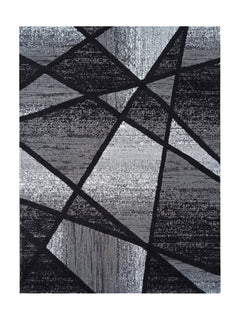
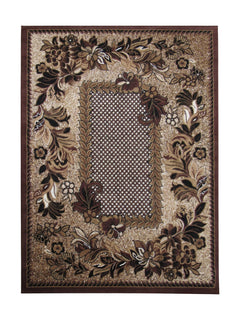
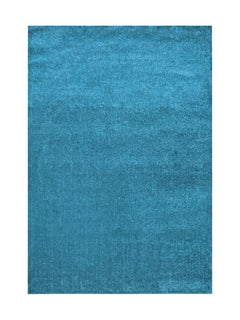
Three Casemira rugs for the living room
 Modern Brown Rug - Valore
 Modern Beige Rug - Arcano
 Washable Vintage Silver Grey Rug - Sherpa
Your questions about rugs under a sofa
How far should the rug extend beyond the sofa?
Does the whole sofa have to sit on the rug?
What size rug for a three-seater sofa?
What size for a corner sofa?
Does the coffee table have to sit entirely on the rug?
Can the rug go in front of the sofa with no legs on it?
Written by the Casemira team, based in Brittany. More about Casemira.