7 min read · Updated 8 July 2026
Viscose has long had an uncertain reputation: an artificial fibre to some, a noble cellulose fibre to others. The technical truth is clearer. Viscose is a plant-based cellulose fibre, a cousin of Tencel, that combines very specific textile properties: a silky feel close to natural silk, a lustrous finish that catches the light, and finer motif detail than animal fibres allow on large rugs. Here is how to read it, and where it sits in the Casemira handmade collection.
1. Viscose, a noble cellulose fibre
Viscose is a cellulose fibre made from plant-based cellulose (wood, bamboo, cotton). It belongs to the same technical family as Tencel (see Tencel rugs) and Modal, and it is distinct both from petrochemical synthetics (polyester, polypropylene) and from animal fibres (wool, natural silk).
Three structural characteristics according to textile industry standards:
A plant origin. The cellulose used to make viscose comes from fast-growing plants. It is a renewable raw material.
A uniquely silky feel. The structure of viscose fibre once spun gives a feel close to natural silk, smooth and cool.
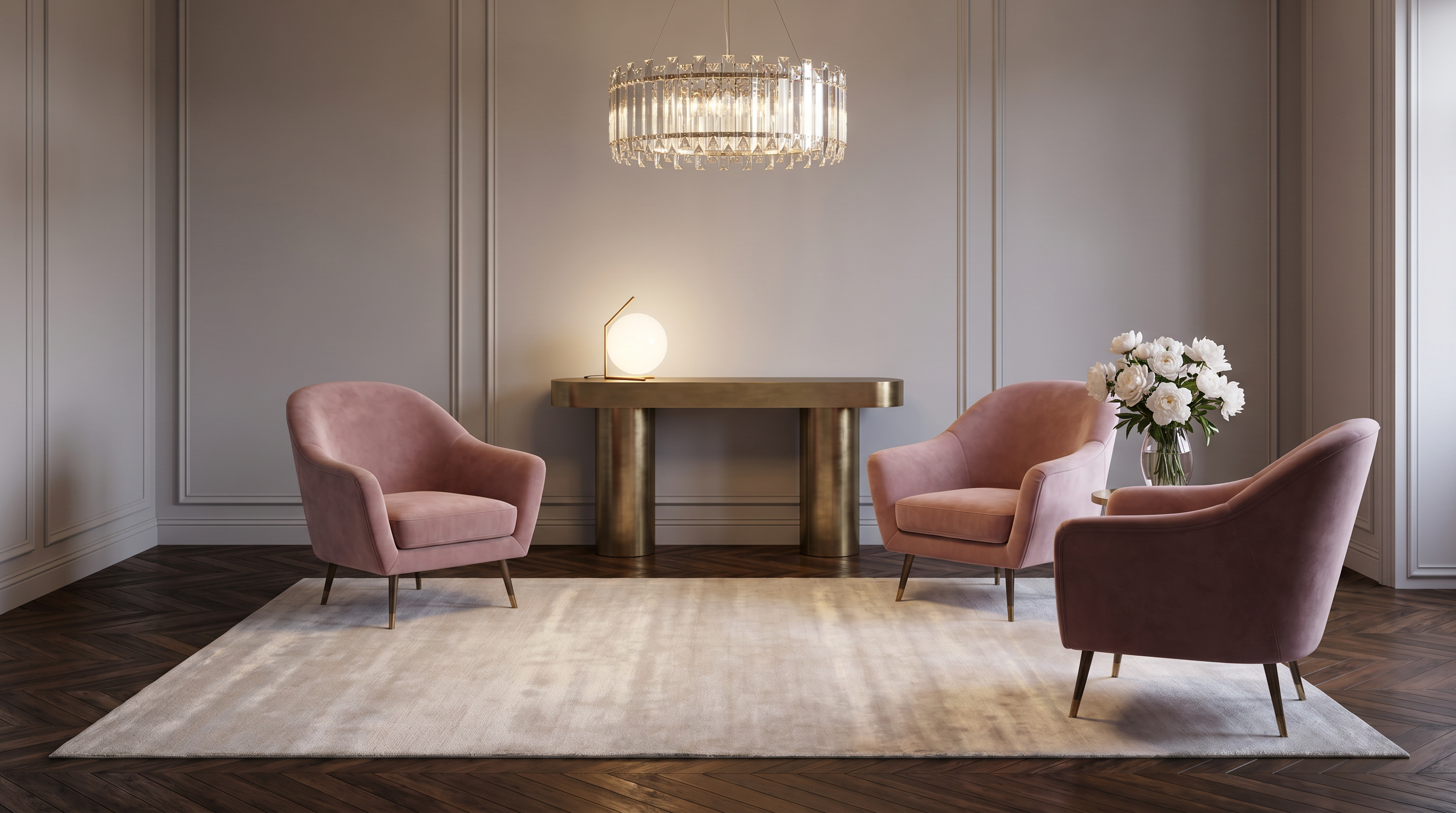
A capacity for lustre. Viscose has a surface that reflects light differently depending on the viewing angle. On a rug, that produces a shifting effect where the shade seems to change as you move around the room.
Where viscose sits in the Casemira collection: viscose is the second fibre by number of designs in the handmade rug collection, after wool (over 80 designs featuring viscose out of more than 700 in total, of which over 30 are 100% pure viscose and over 40 are wool and viscose blends). See also our guide to choosing the right rug material.
2. Viscose vs Tencel: the distinction that matters
| Criterion | Viscose | Tencel |
|---|---|---|
| Technical family | Plant-based cellulose fibre | Lyocell cellulose fibre (an improved viscose sub-family) |
| Feel | Silky, lustrous, soft | Silky, cool, stable |
| Stability in damp | Average | Very good (closed-loop process) |
| Environmental credentials | Varies with the process | High (certified Lyocell process) |
| Casemira designs | Over 80 (over 30 pure, over 40 blends) | 6 (2 pure plus 4 blends) |
| Handmade price range | Mid-range to higher budget | Higher budget |
The takeaway: viscose offers a lustrous finish and a more accessible price than Tencel. Tencel offers greater stability and stronger environmental credentials. Both are plant-based cellulose fibres and technical cousins. For the detail on Tencel, see our guide to Tencel rugs.
How it differs from natural silk: viscose is not natural silk (which comes from an animal). Viscose gives a silk effect in feel and appearance without using an animal fibre. Do not confuse silk-effect viscose with natural silk: they are two very different materials.
3. Properties (lustre, fine detail)
Four main properties of viscose in a rug, according to textile industry standards:
Lustre. The smooth, reflective surface of viscose plays with the light. From one angle the rug looks pale; from another, slightly darker. That shifting effect is unique to viscose and a handful of rare premium fibres.
Fine motif detail. Viscose can be spun more finely than wool. That lets contemporary viscose rugs carry more precise motifs and subtler gradations than their pure wool equivalents. It shows particularly well on designs with complex compositions (Arcadia, Lunaris, Ritmo, Mondo).
A cool feel. Unlike wool, which holds heat, viscose feels slightly cool underfoot. An advantage in summer or in warm climates.
Medium density. Viscose is a relatively light fibre. Rugs in 100% viscose generally have a lower g/m² density than pure wool, which makes for a finer rug that is lighter to handle.
"Viscose plays with light as no other fibre does."
4. Where to use it (gentler rooms)
Viscose suits gentler rooms more than heavily used ones. Three reasons according to textile industry standards:
Sensitivity to heavy footfall. Viscose fibre is less elastic than wool. Under very repeated footfall it gradually flattens. For those uses, favour pure wool or a wool and viscose blend.
Sensitivity to prolonged damp. Not suited to exposed kitchens or bathrooms.
Stains show more. Liquids soak into viscose more readily than into polypropylene.
Ideal rooms for viscose:
- A refined living room for a couple, without young children or boisterous pets
- A main bedroom (moderate footfall, and the feel under bare feet is appreciated)
- A reading corner or a classic study
Rooms to avoid, or where a wool and viscose blend beats pure viscose:
- A family living room with young children
- A living room with boisterous pets (favour the more than 50 Casemira Easy Clean designs, see Easy Clean rugs)
- Corridors and hallways (constant footfall)
- Kitchen, bathroom and damp conservatory areas
5. The Casemira viscose designs
Of the more than 700 designs in the Casemira handmade rug collection, over 80 use viscose: over 30 in 100% pure viscose, over 40 in a wool and viscose blend. All are handmade in India.
Over 30 designs in 100% pure viscose (choose these for maximum lustre):
- Arcadia (steel grey): a contemporary composition, mid-century modern living room
- Lunaris (ivory and black): sophisticated graphic motifs, a couture living room
- Ritmo (beige and black): a strong chromatic dialogue, classic living room
- Mondo (dark blue-grey): a monochrome palette, refined contemporary living room
- Alpina (pure ivory): luminous purity, main bedroom
- And many more designs with varied compositions
Over 40 designs in a wool and viscose blend (choose these to combine durability with lustre):
- Lyra (wool and viscose blend, various palettes)
- Vapore (wool and viscose blend, black marble): an elegant graphic effect
- Trevi oval (wool and viscose blend, beige): a rare oval shape
- Namibia (wool and viscose blend, sand beige): soft contemporary tones
- Ambra oval (wool and viscose blend): an oval shape
- Estella (wool and viscose blend, terracotta accents on cream): a warm palette
Budget: it depends on the design and the size, and each product page shows the exact price.
To check before you buy, some of the handmade viscose designs, including all those listed here, are available as a sample from €10 (free delivery, cost deducted from your rug through the code you receive by email). See how to order a sample. On other designs, free returns within 30 days apply.
6. Caring for viscose
Looking after viscose calls for a few precise rules:
Vacuum weekly without a rotating brush, in the direction of the pile, on moderate power.
No machine washing. Casemira handmade viscose rugs cannot go in the machine. Favour dry cleaning methods.
Fresh stain: blot, do not rub. A clean white cloth and clear cold water. Always test on a hidden 5 x 5 cm patch before applying any product for the first time.
Bicarbonate of soda to freshen up. Sprinkle, brush gently, leave for 1-2 hours, then vacuum. Repeat monthly.
No concentrated acidic products (neat vinegar, lemon) on pure viscose.
Professional rug cleaning once a year or every two years.
Turn the rug 180° every 6 months to even out the wear.
Protection from direct light. Fit curtains or blinds that filter UV during the brightest hours.
For the full guide by material, see how to clean a rug.
Three Casemira rugs for the living room
 Taupe Wool & Viscose Rug - Marea
 Pearl Grey Viscose Rug - Strato
 Black Marbled Wool & Viscose Rug - Vapore
7. FAQ: viscose rugs
Your questions about viscose rugs
Is viscose a synthetic fibre?
No. Viscose is a plant-based cellulose fibre (cellulose extracted from wood, bamboo or cotton). It is not a petrochemical synthetic. Technically it belongs to the same family as Tencel and Modal.
Pure viscose or a wool and viscose blend, which should you choose?
Pure viscose maximises the lustre. A wool and viscose blend combines that lustre with the greater durability of wool. For a gentler room, pure viscose. For slightly more exposure, the blend.
How much does a Casemira viscose rug cost?
Our handmade viscose rugs sit in the mid-range to higher budget bracket, depending on the design and the size. Each product page shows the exact price.
Can you put a viscose rug in a family living room?
Best avoided in family living rooms with young children or boisterous pets. For those homes, favour the more than 50 Casemira Easy Clean designs in polyester, mostly a polyester and cotton blend.
Can viscose go in the washing machine?
No. Handmade viscose rugs cannot go in the machine. Favour vacuuming without a rotating brush, a monthly bicarbonate of soda treatment and a specialist rug clean every one to two years.
Can you test a viscose rug before buying?
Yes, for some of the viscose designs: a sample from €10 comes with free delivery, and its cost is deducted from your rug through the code you receive by email. Free returns within 30 days apply in any case.
Written by the Casemira team, based in Brittany, France. Find out more about Casemira.