7 min read · Updated 3 June 2026
Putting a rug outside means asking it to hold out against three enemies at once: UV light that fades it, damp that spoils it, and footfall that wears it down. Indoor rugs were never designed for that: they soak up water, go mouldy and tear apart by the end of the first summer. An outdoor rug rests on a very different fibre chemistry and a very different construction. Understanding those particularities is the key to choosing well, and above all to protecting your investment year after year.
1. Why Oeko-Tex polypropylene dominates outdoors
The designs in the Casemira outdoor collection are all polypropylene, and all certified Oeko-Tex Standard 100. That is not a marketing line: it is what the material makes possible, where no other fibre lasts.
Three key properties of polypropylene explain that monopoly:
Native hydrophobia. Polypropylene fibre does not soak up water. It wicks moisture away instead of storing it. The result: no mould, no smell, no damage to the weave, even after several downpours in a row.
Built-in UV resistance. Casemira outdoor fibres are stabilised at the production stage to withstand ultraviolet light. Colours hold over time according to textile industry standards, where wool or cotton would fade after two seasons facing south.
Mechanical strength. BCF (Bulk Continuous Filament) and Heat-Set fibres have an elastic memory that returns them to their original position after being walked on. They resist crushing and snagging, and cope with the friction of garden chairs being pulled about.
Oeko-Tex Standard 100 certification guarantees the absence of harmful substances in the fibre and the dyes. That matters for a rug laid outside where children and pets go barefoot.
2. Fibre density and durability
The Casemira outdoor designs cover three density profiles, to be chosen according to use:
Light density: for quiet terraces, decorative balconies and sheltered conservatories. Cheaper, lighter to handle, and even quicker to dry. Worth favouring if the rug comes indoors over winter.
Standard density: the balance point, ideal for most family terraces. It holds up well over time, copes properly with daily footfall and stays affordable.
High density: for intensive use (a restaurant terrace, a busy city balcony, an outdoor play area). Maximum retention of volume under repeated footfall. Its service life in the open air is appreciably longer according to textile industry standards.
The exact density in g/m² appears in the specifications for each design. If you are hesitating, buying a rug online without getting it wrong is also backed by the Casemira free returns within 30 days. On budget, the price depends mainly on the size and the density of the design, and each product page shows the exact price.
3. Choosing by aspect
The aspect of your outdoor space shapes the best choice:
| Aspect | Recommended density | Recommended size |
|---|---|---|
| South-facing terrace, fully exposed | Standard or high density | 200 x 290, 160 x 230 depending on the zone |
| City balcony, sheltered | Light to standard | 120 x 170, outdoor runner |
| Pergola, partial shade | Standard | 200 x 290 or larger for a big pergola |
| Conservatory, sheltered | Light | Depending on the layout |
| Poolside | High density (drying comes first) | A narrow runner along the poolside |
For terraces that are entirely open, with no shade at all, the ideal is to bring the rug in during heavy rain to limit how long it stays saturated, even though polypropylene copes with it. That habit significantly extends its service life. See also our full guide to outdoor rugs for terrace, balcony and pergola use.
"An outdoor rug is not a rug you leave outside. It is a rug that can live outside."
4. Shapes available
In the Casemira outdoor collection, three families of shape:
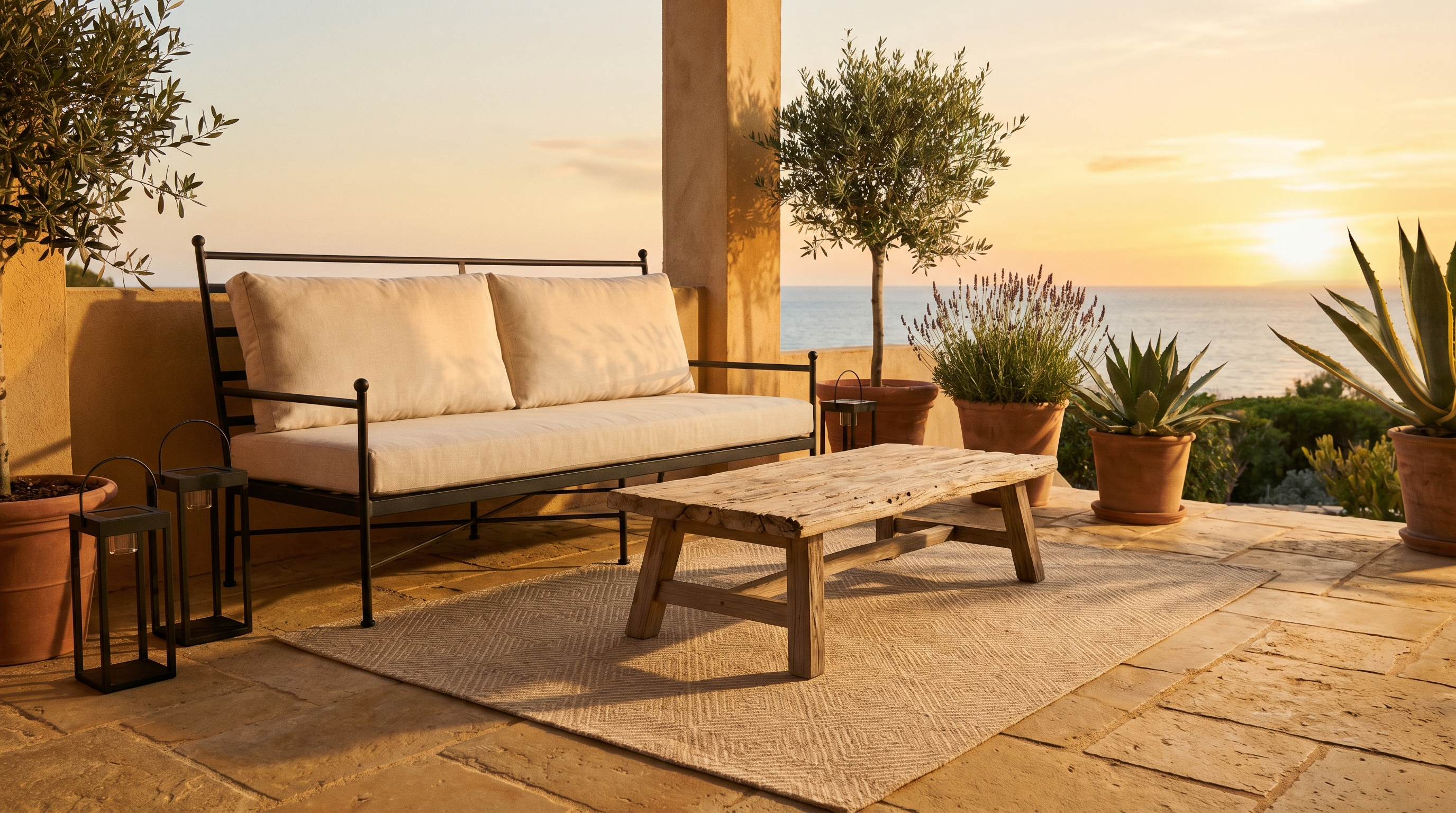
Rectangular (the vast majority of designs), from 80 x 150 to 200 x 290 cm depending on the reference. The rectangle remains the dominant outdoor shape, perfect for framing a garden seating set, an outdoor bench with a coffee table, or a dining corner.
Outdoor runner (two designs, Kalista No. 2 in grey and in brown) for long, narrow walk-through terraces, poolside walkways and corridor-shaped city balconies. An elongated shape (60 to 120 cm wide, 0.50 to 10 m long) that reads as a pathway.
Round (one design, Soléa in amber beige) to soften a terrace with very geometric lines, or to frame a round garden table. An island effect on rectangular slabs or paving.
For the detail of sizing rules by use, see our guide to choosing the right rug size.
5. Care: hosing down, drying, winter storage
The great advantage of outdoor polypropylene: you can wash it with a hose. Three routines depending on the situation:
Regular upkeep (every fortnight in season): sweep or vacuum to remove leaves, dust and sand. If needed, run a low-pressure hose over the surface and let it dry for 30-60 minutes in the sun.
A fresh stain (wine, sauce, coffee): blot it immediately with a clean cloth. Spray with water and diluted liquid black soap (1 teaspoon to 500 ml of water). Blot. Rinse with a low-pressure hose. Leave to dry in the sun.
An old stain or a very dirty area: lay the rug on a flat surface (terrace, path, short grass), then use a soft brush and diluted liquid black soap, working in circles. Rinse thoroughly with the hose. Leave to dry completely, laid flat, before putting it back.
Winter storage. The universal recommendation: bring the outdoor rug in from November to March and keep it somewhere dry (cellar, garage, covered garden store). Dry it thoroughly before storing. Roll it rather than folding it to avoid permanent crease marks. That single habit can double its outdoor service life according to textile industry standards.
For general rug care (dry, damp, machine), see our guide to how to clean a rug.
6. Common mistakes to avoid
Mistake 1: using an indoor rug outside. A wool rug, a viscose or Tencel one, or even some indoor polypropylenes that are not UV-stabilised, will not survive outdoors. The fibre fades within weeks, and damp brings mould and smells. Always check that the design is explicitly made for outdoor use.
Mistake 2: leaving the rug rolled up while damp. After rain, never roll a rug that is still damp. Trapped moisture rapidly degrades the fibre and any backing. Always dry it completely before storing.
Mistake 3: laying it without an underlay on a very smooth floor. On sealed slabs or very smooth outdoor tiles, the rug can slide. A thin outdoor non-slip underlay (sold in any DIY store) solves the problem.
Mistake 4: choosing something undersized. A rug that is too small on a large terrace looks as though it is floating. Measure the area you want to dress (table plus chairs with a 60 cm margin all round) before choosing.
Mistake 5: confusing an outdoor rug with a water-repellent indoor one. A water-repellent indoor rug (with an added repellent treatment) is not an outdoor rug. It resists accidental spills but not UV or prolonged damp. See the difference in detail in our guide to Easy Clean rugs.
Three Casemira rugs for outdoors
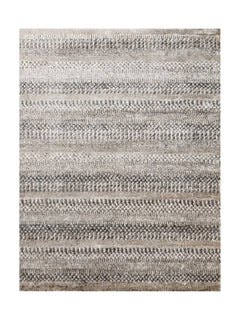
 Grey Vintage Outdoor Rug - Kalista
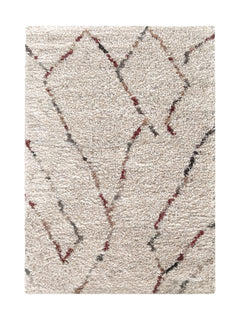
 Sand Boho Outdoor Rug - Tavola
 Multicolour Outdoor Rug - Estiva
7. FAQ: outdoor rugs
Your questions about outdoor rugs
Is outdoor polypropylene genuinely UV-resistant?
Yes, provided it is UV-stabilised in production, which is the case for every Casemira design in the outdoor collection. Colours hold over time according to textile industry standards. Indoor polypropylenes that are not stabilised are not suitable for outdoor use.
Can you wash an outdoor rug with a hose?
Yes, and it is the recommended method. A low-pressure hose over the surface, diluted liquid black soap for stains, a thorough rinse and drying in the sun. Hydrophobic polypropylene does not soak up water and dries in 30-60 minutes depending on the weather.
Should you bring an outdoor rug in over winter?
Ideally yes, from November to March. Store it somewhere dry (cellar, garage, covered shelter), thoroughly dry and rolled rather than folded. That single habit can double the rug's service life according to textile industry standards, by avoiding prolonged freeze-thaw exposure.
How much does a Casemira outdoor rug cost?
The price depends mainly on the size and the density of the design. Each product page shows the exact price, along with the sizes available and the exact density.
What is the difference between an outdoor rug and a water-repellent indoor one?
An outdoor rug is built to withstand UV, prolonged damp and outdoor footfall. A water-repellent indoor rug (the Easy Clean designs, for instance) resists accidental spills but not UV or prolonged damp. See our guide to Easy Clean rugs.
Will an outdoor rug slide about on my terrace?
On most outdoor surfaces (concrete slabs, paving, textured tiles), no. On a very smooth floor (sealed slabs, polished tiles, glazed terracotta), an outdoor non-slip underlay (from any DIY store) will keep it in place.
Written by the Casemira team, based in Brittany. Find out more about Casemira.