8 min read · Updated 9 June 2026
In the world of high-end contemporary rugs, two words keep coming back as a promise of quality: New Zealand wool. That reputation is not empty marketing. It rests on the particular technical characteristics of a fibre that, since the 1970s, has redrawn the standards of the premium rug worldwide. Here is why, and what it means in practice within the Casemira handmade range.
1. Wool, the universal fine fibre
Wool remains the fibre most used historically for quality rugs, for five technical reasons by textile industry standards:
Natural resilience. Every wool fibre can be bent thousands of times without breaking. In a rug, that translates into resistance to crushing: the pile springs back after being walked on, and the rug holds its volume for years.
Exceptional dye uptake. Wool absorbs pigment deep into the fibre and delivers colours that are particularly rich and stable over time. The shades acquire a patina as they age, without losing the depth they had on day one.
Flame resistance. Wool self-extinguishes on contact with a direct flame. That makes it one of the safest fibres for a living room rug, particularly in front of a stove or an open fire.
Thermal and moisture regulation. Wool absorbs and releases ambient moisture, which contributes to the thermal comfort of the room. In winter it holds the warmth in; in summer it stays cool to the touch.
Naturally dust-mite resistant. The scaly structure of the fibre limits the spread of dust mites and mould. A notable advantage in everyday living spaces, particularly bedrooms and living rooms.
For general background on rug textiles, see our guide to choosing a rug material.
2. What makes NZ wool different
Not all wools are equal. New Zealand wool has established itself as the high-end benchmark for four specific reasons:
An exceptionally long fibre. New Zealand sheep (notably the Romney and Perendale breeds, raised on the wet pastures of the North Island) produce wool with unusually long fibres. A long fibre spins more evenly, gives a stronger yarn and weaves into more durable rugs by textile industry standards.
Exceptional natural whiteness. NZ wool has a very white, almost ivory base tone. That purity allows bright, clear, true colours after dyeing, where a greyer wool would need chemical bleaching first, weakening the fibre in the process.
Superior resilience. New Zealand wool is known for holding its shape even after years of footfall. On a handmade rug 8 to 12 mm thick, that resilience directly determines how long it stays looking good.
A dense, silky feel. The average thickness of the fibre (measured in microns) places NZ wool in the medium-to-fine category, an ideal compromise between softness underfoot and mechanical strength.
These qualities have made NZ wool a recognised benchmark right across the high-end textile industry worldwide, from hand-tufted rugs to premium wool carpet.
3. How Casemira uses NZ wool
Of the more than 700 designs in the handmade rug collection, more than 650 use wool (the rest are built on viscose, jute or Tencel). Among those wool designs, some pieces are explicitly made in New Zealand wool, as the product specifications state.
⚠️ Important, in the interest of transparency: Casemira does not declare the origin of the wool uniformly across 100% of its designs. To confirm that a rug is made in NZ wool, check the Specifications section of the product page, where the origin is stated when that is the case. Where no origin is explicitly declared, the rug is described simply as quality handmade wool.
This practice is consistent with textile industry standards: wool is often bought in multi-origin lots (New Zealand, Australia, the United Kingdom), and only designs using pure, traced NZ wool carry that label explicitly.
Construction. Every design in the collection is handmade, in India or in Morocco (Berber rugs). The specifications section of each product page states how it is made.
Price range. The price of Casemira handmade wool designs depends on size, design and pattern complexity. For context on price bands, see spotting a quality rug.
"Wool does not age, it acquires a patina. That is what changes everything."
4. Feel, durability, thermal insulation
Three practical properties of a wool rug, by textile industry standards:
Feel. Wool is warm and slightly springy underfoot, bouncing back as you step. It is particularly noticeable in bare feet in the morning. That is the exact opposite of polypropylene (dry, smooth) or Tencel (cool, silky). For that reason, wool is the favourite in main bedrooms and reading corners, where tactile comfort comes first.
Durability. By textile industry standards, a quality wool rug holds its volume and its colours for 15 to 25 years in normal use, and longer in a lightly used room. Premium polypropylene typically lasts 5 to 10 years. That difference in lifespan justifies the difference in price, and spreads the initial investment.
Thermal insulation. Wool traps air within its scaly structure, creating an insulating layer at floor level. In practice, a 200 x 300 wool rug in a living room noticeably reduces cold feet in winter, which is especially welcome on tiles or on old, uninsulated floorboards.
Acoustic control. Wool fibre absorbs sound better than synthetics do. In a room with open wooden floors, the acoustic effect of a 200 x 300 wool rug is immediately audible.
Those advantages come at a cost in upkeep (see the next section) and in sensitivity to grease. But for anyone after a durable, comfortable rug, wool remains the benchmark fibre.
5. Caring for wool specifically
Looking after a wool rug calls for specific rules:
Vacuum weekly in the direction of the pile, with no rotating brush (a brush pulls at the fibre and shortens the rug's life). Use moderate power, and reduce it further on long-pile designs such as wool shaggy.
No machine washing. Unlike the washable designs in synthetic blends, a handmade wool rug never goes in the machine. The fibre felts and the rug distorts. Always check the label, but across the Casemira handmade collection this is the universal rule.
Fresh stains: blot without rubbing. Use a clean white cloth and clean cold water. For stubborn stains, add a little heavily diluted liquid black soap (one teaspoon per 500 ml of water). Always test on a hidden 5 x 5 cm patch before the first application.
Bicarbonate of soda to freshen up. Sprinkle over the whole surface, brush gently, leave for 1 to 2 hours, then vacuum. This deodorises and lifts the pile. Repeat monthly in a busy area.
A specialist rug clean every 2 to 3 years. For a deep clean, use a professional cleaner trained on wool. That investment preserves both the fibre and the value of the rug over time.
Turn the rug 180° every 6 months to even out wear. Particularly important on traffic lines, in front of the sofa or near a doorway.
See our complete guide to cleaning a rug for the detail material by material.
6. Casemira handmade wool designs
Across the more than 650 wool designs in the handmade collection, several ranges sit side by side:
The pure 100% wools. The vast majority of designs, built exclusively in wool, with no blend. Signature designs: Hudson (ivory and black), Minho (grey), Vektor (pale beige), Velino (ecru), Venere (pastel), Circo (ivory). These give the fullest expression of the wool fibre.
The wool and viscose blends. More than 40 designs combining wool (for structure and durability) with viscose (for lustre and fineness of detail). Designs such as Estella (wool and viscose), with terracotta accents on a cream ground. Wool and viscose blends particularly suit refined living rooms where the visual result matters as much as the robustness.
The wool and Tencel blends. A few high-end designs combining wool with Tencel for a lustrous, more sustainable result. The Agata design (wool and Tencel, special shape) is one.
Some of the handmade wool rugs have a sample from €10 (free delivery), deducted from your rug with the code you receive by email. That is your chance to test the feel before ordering, particularly on the bigger commitments.
For the detail on materials and cross-comparisons, see 100% wool rugs versus 80/20 blends.
Three Casemira rugs for the living room
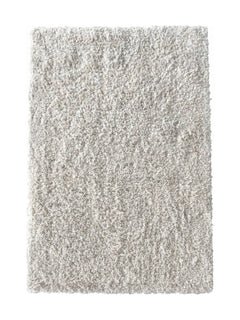
 Ecru 100% Wool Rug - Velino
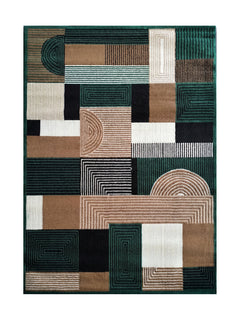
 Dark Brown 100% Wool Rug - Riccio
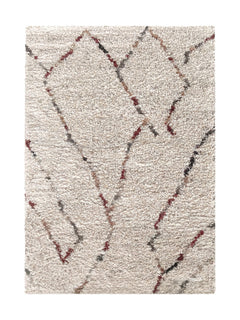
 Multicolour 100% Wool Rug - Astrale
7. FAQ: NZ wool rugs
Your questions about NZ wool rugs
Are all Casemira wool rugs made from NZ wool?
No. Of the more than 650 wool designs in the handmade collection, some pieces are explicitly made in New Zealand wool and others in wool from elsewhere. Each product page is the reference: the Specifications section states the origin where the wool is pure, traced NZ. For the other designs, the description is simply quality handmade wool, with no uniform origin stated.
Why is NZ wool regarded as the benchmark?
Four reasons: an exceptionally long fibre, natural whiteness that allows bright, true dyeing, superior resilience by textile industry standards, and a dense, silky feel. Together these have made NZ wool a recognised benchmark right across the high-end textile industry worldwide.
How long does a wool rug last?
By textile industry standards, a quality wool rug holds its volume and its colours for 15 to 25 years in normal use, and longer in a lightly used room. That is two to four times longer than premium polypropylene.
Can a wool rug go in the washing machine?
No. Wool felts and the rug distorts. Across the Casemira handmade collection, machine washing is universally advised against. Stick to a weekly vacuum (with no rotating brush), monthly bicarbonate of soda to freshen it, and a specialist rug clean every 2 to 3 years.
What is the difference between pure wool and a wool-viscose blend?
Pure wool gives maximum robustness and tactile warmth, and the longest life. A wool and viscose blend combines the structure of wool with the lustre of viscose, which is particularly prized in a refined living room. The full comparison is in our guide to 100% wool rugs versus blends.
Does wool suit a household with pets?
With care. Wool stands up to claws better than people expect, and its scaly structure limits dust mites. But pet urine stains wool permanently and has to be dealt with fast. For a household with boisterous animals, the Easy Clean designs in polyester (mostly a polyester and cotton blend) are more forgiving day to day.
Written by the Casemira team, based in Brittany. More about Casemira.